Friday, November 26, 2010

Celebration of Failure

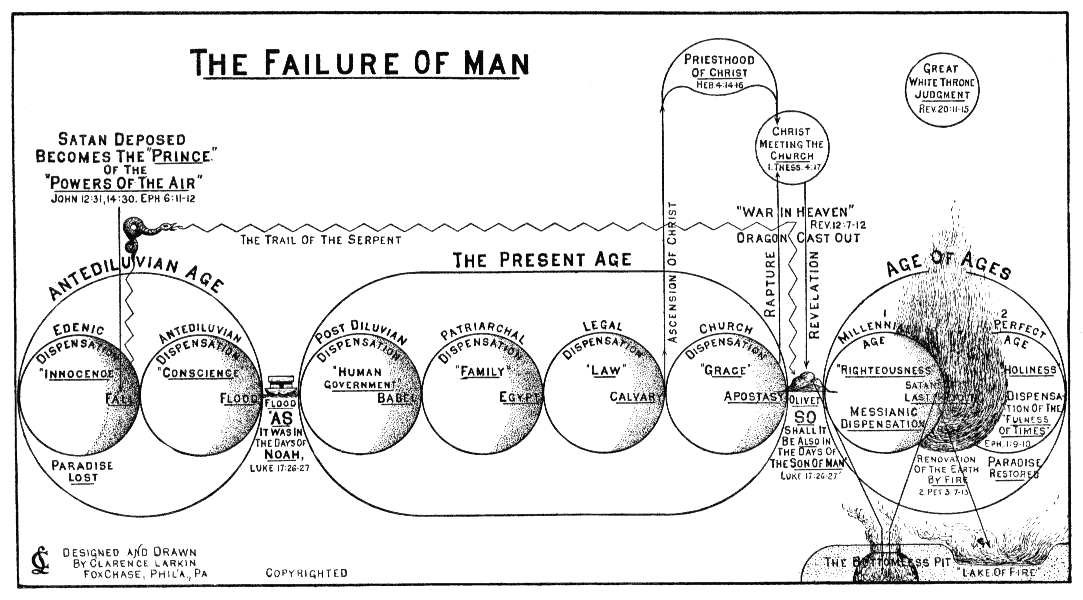
The Failure Of Man
Details the failure of man in every dispensation.

from Dispensational Charts
by Clarence Larkin


In a recent Nature Careers Column, post-doc Melanie Stefan argues that it's helpful to publicize your failures. The idea is that if others know you have failed to obtain funding or publish papers, it makes them feel better. Hopefully not from schadenfreude, but from the common experience of traversing the minefield of attaining (or maintaining) a lasting career in science.

A CV of failures

Keeping a visible record of your rejected applications can help others to deal with setbacks, says Melanie Stefan.

A couple of months ago, I received a letter informing me that my fellowship application had failed....

. . .

As scientists, we construct a narrative of success that renders our setbacks invisible both to ourselves and to others. Often, other scientists' careers seem to be a constant, streamlined series of triumphs. Therefore, whenever we experience an individual failure, we feel alone and dejected.

. . .

So here is my suggestion. Compile an 'alternative' CV of failures. Log every unsuccessful application, refused grant proposal and rejected paper. Don't dwell on it for hours, just keep a running, up-to-date tally. If you dare — and can afford to — make it public. It will be six times as long as your normal CV. It will probably be utterly depressing at first sight. But it will remind you of the missing truths, some of the essential parts of what it means to be a scientist — and it might inspire a colleague to shake off a rejection and start again.

I have periodically engaged in such a masochistic exercise. And no, I have never publicized the List of Failure or the Table of Failure™ (Excel spreadsheet). I'm not that magnanimous...

My setbacks are all too visible to myself. Would it really make you feel better to read about them?


Reference

Stefan M (2010). A CV of failures. Nature 468: 467.


CELEBRATION OF FAILURE

Through pain the land of pain,
Through tender exiguity,
Through cruel self-suspicion:
Thus came I to this inch of wholeness.

It was a promise.
After pain, I said,
An inch will be what never a boasted mile.

And haughty judgement,
That frowned upon a faultless plan,
Now smiles upon this crippled execution,
And my dashed beauty praises me.

-Laura Riding

Tuesday, November 23, 2010

Mirror Neuron Dance Party for Autism Spectrum Disorders


With your hosts, V.S. Ramachandran and and E.L. Seckel (2010) of VH1's The Surreal Life: Medical Hypotheses.
...We proposed and provided the first experimental evidence for a dysfunctional MNS [mirror neuron system] in ASD [autism spectrum disorders] (Altschuler et al., 1997). ... Nonetheless evidence at this point is “compelling but not conclusive”.

On the assumption that the MNS is not completely missing but “dormant”, could they be revived? We propose having the children look into a room with multiple mirrors at various angles to provide multiple allocentric views of themselves. Three neurotypical volunteers would stand inside the room and dance to a rhythm while the child dances in synchrony with them. This is different from conventional dance therapy in ASD in that our treatment specifically emphasizes synchronous dance movements mimicking others (as well as the simultaneous presence of multiple mirror refections) in order to optimally stimulate any residual MNS. Given the existence of tactile – sensory mirror neurons that fire when you merely watch someone else being touched, one could also deliver varying patterns of touch as the child watches. The use of multiple reflections makes it unavoidable that the child has to see itself [sic] stimulated. One may need to start with simple rhythms and progressively graduate to more complex ones incorporating more elaborate gestures. The subjects could be tested for lasting improvement in behavioral scores which might spill over into more useful domains such as social interactions.

MTV is planning to air its own version of this hot new treatment modality, Mirror Neuron Live.


References

Altschuler EL, Vankov A, Wang V, Ramachandran VS, Pineda JA. Person See, Person Do: human cortical electrophysiological correlates of monkey see monkey do cells. In: Poster session presented at the 27th annual meeting of the society for neuroscience. LA: New Orleans; 1997.

Ramachandran, V., & Seckel, E. (2010). Synchronized dance therapy to stimulate mirror neurons in autism Medical Hypotheses DOI: 10.1016/j.mehy.2010.10.047


VS Ramachandran's Modest Proposal: The neurons that shaped civilization.

Friday, November 19, 2010

Random Observations from SfN 2010

SfN Posterface - UCSD graduate student dance party at the San Diego convention center, Hall Gaga.

The 40th annual meeting of the Society for Neuroscience was held Nov. 13-17 in San Diego, CA. Attendance this year was over 31,500. SfN tried to improve the participatory social media coverage of the conference (after last year's #sfn the meh debacle) by highlighting the official Neuroscience 2010 Neurobloggers in a more prominent fashion. I'm still trying to make sense of the 160 posters, talks, and lectures on my itinerary, but in the meantime here are capsule summaries of several posters.


Patients with left temporal lesions [DO NOT] report decreased religious experience. Oops, change of title.

A novel visuospatial test of creativity activated large chunks of both the right AND left cerebral hemispheres in a group of architects. Creativity should no longer be considered the exclusive domain of the right hemisphere, even for a cognitive function that typically shows a right lateralized bias (also see this review by Dietrich and Kanso, 2010).

Remember "Women w/ low libidos have diff brains"? Now the group of women with hypoactive sexual desire disorder no longer show that pesky, problematic activity in the primary motor cortex!

A low dose of red wine impairs planning and problem solving abilities in the Tower of Hanoi task. It also scrambles the normal distribution of EEG frequency bands.

Furthermore, drinking moderate doses of alcohol (BAC=0.055, under the legal limit for driving in the U.S.) will result in the commission of more errors in the Stroop task and a suppression of theta band activity in the medial frontal cortex.

Lady GABA - from the SfN Posterface video.


The SfN Posterface preview.

This crank poster was very crowded: A “Humpty-Dumpty” theory for why we dream. It listed 21 (or so) rebuttals to possible objections. I didn't have the time (or patience) to read them all.

Why do the mere words "Hindu" "Jewish" "Christian" "Muslim" "Atheist" and "Scientologist" constitute exposure to an ingroup or outgroup? Why does n=27 Christians, n=6 Atheists, and n=4 Hindus provide the basis for adequate group comparisons? Because it’s empathic responses for another's pain!

Although drinking red wine was detrimental to cognitive performance, watching erotic videos was not. You'll be glad to hear that complex problem solving abilities in the Tower of Hanoi task were not impaired in moderately sexually aroused males. However, the pattern of cortical EEG correlations was altered.


I'll get him hot, show him what I've got
Oh, oh, oh, oh, ohhhh, oh-oh-e-oh-oh-oh,
I'll get him hot, show him what I've got

------Lady Gaga

Friday, November 12, 2010

Tetris Helps Prevent Unpleasant Memories of Gory Film in Happy People


Most everything you've read about the Doctors Prescribing 'Tetris Therapy' study is wrong. That ridiculous headline, courtesy of "fair and balanced" Fox News, is the most egregious lie I could find [if you have other favorites, please leave links in the comments]. Press stories frequently distort research findings, but sometimes the authors themselves shoulder the most blame (Holmes et al., 2010). Misuse of the words "trauma" "flashback" "cognitive vaccine" and "PTSD" are at fault here.

The experiment in question is interesting as a memory study. It demonstrated that playing a visuospatial video game (Tetris) 30 min after a disturbing film can lessen intrusive visual memories, but playing a verbal trivia game (Pub Quiz) can have the opposite effect (Holmes et al., 2010). According to Baddeley (1992), this occurs because of two modality-specific working memory systems: the visuospatial sketchpad for visual working memory and the phonological loop for verbal working memory. Tetris interferes with the former, while Pub Quiz interferes with the latter.

Sixty participants (18–60 yrs old; mean age=27 yrs; 30 females) took part in Experiment 1. They were carefully screened for trauma history, mood, trait anxiety and depression. Potential subjects were excluded if they had ever been treated for mental illness of any kind. So this is a group of healthy controls -- not depressed, not anxious, minimal exposure to trauma, and no PTSD. They were a happy bunch, with mean scores on the Beck Depression Inventory (BDI) of 5.7-6.2.1

The participants were divided into three groups for the different treatment conditions, illustrated below.


Figure 1 (from Holmes et al., 2010). Experiment 1 study design overview.
Participants completed the trauma film paradigm, a well established experimental analog for PTSD. All participants viewed a traumatic film followed by a 30-min structured break. Participants were then allocated to one of three experimental conditions [Tetris vs. no-task control vs. Pub Quiz] which they completed for 10 min. Afterwards participants in the computer game conditions rated their enjoyment of the game. Flashbacks (involuntary memories) were monitored for 1 week using an intrusion diary. After 1 week, diary compliance was checked and a test of voluntary memory (recognition memory test) for the trauma film was administered.

What is the "trauma film paradigm"?
The 21-min film [previously used in 22] contained 15 clips of traumatic content including fatal road traffic accidents and graphic scenes of human surgery.
Following that link leads you to this description (and a series of other studies):
Participants were shown a 13 min film of real-life footage of the aftermath of road traffic accidents (compiled by Steil, 1996). This film has been used extensively in studies using the trauma film paradigm (e.g. Brewin and Saunders, 2001, Hagenaars et al., 2008, Halligan et al., 2002, Holmes et al., 2004, Holmes et al., 2006, Holmes and Steel, 2004 and Stuart et al., 2006). It consists of five separate scenes each introduced by a short commentary providing context for the scene.
To begin with, actual trauma isn't forewarned or contextualized in advance. It's surprising and shocking. Granted, ethical considerations require informing the participants at the time of recruitment, but this imposes even more limits as a model of real trauma.

Going back to the string of references, the first citation (Steil, 1996) indicates the author studied "Posttraumatic intrusions after road traffic accidents" (not merely watching a road traffic accident film). Nonetheless, let's quickly review some of the other papers, with an eye on the terminology used by the respective authors. Brewin and Saunders (2001) looked at "intrusive memories for a stressful film". Hagenaars et al. (2008) reported on "the development of intrusions after an aversive film". In 2004, Holmes et al. studied "intrusive memory development". Notice that "traumatic" and "flashbacks" aren't yet part of the lexicon. As time went on, Holmes et al., 2006 called it a "traumatic film" but hadn't yet transformed "intrusive memories" into "flashbacks". The language used to describe the experimental phenomena shapes the reader's willingness to view the film paradigm as a proxy for real trauma.

What is a true flashback? Here's the relevant section of the DSM-IV Criteria for Posttraumatic Stress Disorder, which describes a flashback episode as a complex, multi-sensory experience and not just a visual memory:
(3) acting or feeling as if the traumatic event were recurring (includes a sense of reliving the experience, illusions, hallucinations, and dissociative flashback episodes, including those that occur upon awakening or when intoxicated).
Another element of these experimental designs can include ratings of how upset the participants were while viewing the gory film (Holmes et al., 2004):
Participants rated their distress associated with viewing the film after it had ended. They also rated their level of depression, anger, happiness, and anxiety both pre- and postfilm. Eleven-point scales were used, with anchors of 0 (not at all) and 10 (extremely).
In that study, ratings were 5.1 for a "no task" condition that did not involve a secondary task while watching the video. So these participants were not especially distressed. Furthermore, this unvalidated self-rating scale has no clinical relevance to PTSD. Eleven-point scales were also used to rate [non-clinical] levels of depression, anger, happiness, and anxiety both pre- and postfilm.

Finally, to illustrate that the "trauma film paradigm" bears no relation to the lasting effects of real trauma that can cause PTSD is this ethical clarification (Holmes et al., 2004):
With respect to the ethical issues of showing a film with traumatic content, we note that previous studies using the same trauma film (Brewin & Saunders, 2001; Murray, 1997), as well as those using other trauma films (e.g., Davies & Clark, 1998), found that no participants reported ongoing distress subsequent to the end of the experiment. Further, although transiently distressing, the film content is similar to that witnessed by television viewers watching programs such as news coverage of road traffic accidents, or programs about the police or ambulance service work.
I'm not dismissing the possibility that therapies based on these experimental parameters may eventually have clinical usefulness. What I'm suggesting is that the authors show more restaint in their use of terminology (e.g., immediately calling their experimental task a "cognitive vaccine"), and in their extrapolation of experimental findings in healthy subjects to effective treatments for those suffering from PTSD.

Thanks to Sandra of Channel N for helpful discussions.


Footnote

1 Scoring for the BDI-II is: 0–13: minimal depression; 14–19: mild depression; 20–28: moderate depression; and 29–63: severe depression.

References

Baddeley A. (1992). Working memory. Science 255:556-9.

Holmes EA, Brewin CR, Hennessy RG. (2004). Trauma films, information processing, and intrusive memory development. J Exp Psychol Gen. 133:3-22.

Holmes, E., James, E., Kilford, E., & Deeprose, C. (2010). Key Steps in Developing a Cognitive Vaccine against Traumatic Flashbacks: Visuospatial Tetris versus Verbal Pub Quiz. PLoS ONE, 5 (11) DOI: 10.1371/journal.pone.0013706
Friday, November 5, 2010

Research Domain Criteria for Classifying Mental Disorders

"The more a delusion is investigated, the more understandable and less bizarre it becomes, often interwoven with the very individual patterns of experiencing relationships, adversities and suffering, and finally, for every delusional content, as bizarre and remote as it may appear, there may be a cultural niche, in which the same content may be considered legitimate and reasonable."

-Pfeifer (1999), Demonic Attributions in Nondelusional Disorders.


What is psychopathology?

According to Wikipedia,
Psychopathology is the study of mental illness, mental distress and abnormal, maladaptive behavior. The term is most commonly used within psychiatry where pathology refers to disease processes. Abnormal psychology is a similar term used more frequently in the non-medical field of psychology.
But what is "abnormal, maladaptive behavior"? That's such an enormously complicated question that I wouldn't know where to begin. In fact, as a non-clinician I think it would be rather pompous of me to try and define the parameters of what is (and is not) pathological. For that I refer the reader to the ICD-10 or the Diagnostic and Statistical Manual of Mental Disorders (DSM), both voluminous (and imperfect) attempts to diagnose mental illness based on signs and symptoms. As most of you know, the DSM-IV is currently in the process of being revised. The DSM-5 will be the controversial new revision, with a (delayed) publication date of May 2013.

The National Institute of Mental Health (NIMH) in the U.S. is starting to take a different approach to the classification of psychiatric disorders, one that incorporates dimensions of observable behavior as well as neurobiological measures. The aim of the Research Domain Criteria (RDoC) project...
...is to define basic dimensions of functioning (such as fear circuitry or working memory) to be studied across multiple levels of analysis, from genes to neural circuits to behaviors, cutting across disorders as traditionally defined.
The RDoC draft outlines some problems with the present DSM approach:
However, in antedating contemporary neuroscience research, the current diagnostic system is not informed by recent breakthroughs in genetics and molecular, cellular and systems neuroscience. Indeed, it would have been surprising if the clusters of complex behaviors identified clinically were to map on a one-to-one basis onto specific genes or neurobiological systems. As it turns out, most genetic findings and neural circuit maps appear either to link to many different currently recognized syndromes or to distinct subgroups within syndromes. If we assume that the clinical syndromes based on subjective symptoms are unique and unitary disorders, we undercut the power of biology to identify illnesses linked to pathophysiology and we limit the development of more specific treatments. ... To date, there has been general consensus that the science is not yet well enough developed to permit neuroscience-based classification. However, at some point, it is necessary to instantiate such approaches if the field is ever to reach the point where advances in genomics, pathophysiology, and behavioral science can inform diagnosis in a meaningful way.
There is no absolute timeline of when these advances might occur. Instead of providing an immediate replacement for DSM and its clinical diagnoses, RDoC is a long-term project to help the research community by defining more biologically based organizational principles for various psychopathologies:
RDoC will follow three guiding principles, all diverging from current diagnostic approaches. First, RDoC is conceived as a dimensional system (reflecting, e.g., circuit-level measurements, behavioral activity, etc.) spanning the range from normal to abnormal. ... Second, RDoC is agnostic about current disorder categories. The intent is to generate classifications stemming from basic behavioral neuroscience. Rather than starting with an illness definition and seeking its neurobiological underpinnings, RDoC begins with current understandings of behavior-brain relationships and links them to clinical phenomena. Third, RDoC will use several different levels of analysis in defining constructs for study (e.g., imaging, physiological activity, behavior, and self-reports of symptoms).
What are the biological mechanisms driving abnormalities in the observed behaviors ("constructs") of e.g. fearfulness, reward sensitivity, attention, and self-representation? As shown in the matrix below, five major domains have been proposed to group the behavioral constructs, which can be evaluated at six levels of analysis.


The basic idea is that these domains and constructs can go awry in any number of disorders. For instance, if you type "altered reward processing" into PubMed, among the 80 entries are studies in pediatric bipolar disorder, drug addiction, autism, schizophrenia, obesity, pathological gambling, mania, ADHD, and antisocial personality disorder. What are the neural correlates of altered reward processing? Is there a common mechanism across the various diagnostic categories listed above? Are many of the genes that predispose one to altered reward processing shared across disorders?

Another problem that RDoC aims to address is extensive co-morbidity in many of the current diagnostic categories. A prime example is the complex construct of borderline personality disorder (BPD), marked by affective instability, unstable interpersonal relationships, and self-destructive behavior. NIMH notes that about 85 percent of people with BPD also meet the diagnostic criteria for another disorder, including:
  • 61 percent also have at least one anxiety disorder, most commonly a specific phobia, or social phobia
  • 49 percent have an impulse-control disorder, most commonly intermittent explosive disorder
  • 38 percent have a substance abuse or dependence disorder, most commonly alcohol abuse or dependence
  • 34 percent have a mood disorder, most commonly dysthymia (mild, chronic depression), or major depression.
Here, one can view the diagnostic category of BPD as a collection of symptoms (or disorders) that can vary across individuals. The same can be said of schizophrenia. How do alterations in the underlying biological mechanisms drive various manifestations of mental disorders (Sanislow et al., 2010)?
...any given disorder can be marked by disruptions among multiple mechanisms, and one particular mechanism may contribute to the psychopathology of a large number of disorders. Thus, the same mechanisms can be implicated in “different” disorders, whereas multiple mechanisms can be implicated in “one” disorder.

Is Big Pharma abandoning psychiatry? (see Mind Hacks)

The leaders of NIMH have expressed the opinion that the DSM and ICD have hindered the development of new treatments (Insel et al., 2010). Given the limited effectiveness of many pharmaceutical interventions, it is patently obvious that a new approach is needed. Since the ultimate goal of the RDoC project is to improve treatment outcomes, its authors will have to convince some of the major drug companies to resume their "unprofitable" psychiatry R&D pipelines.


NOTE: This post is part of a blog carnival that addressed the question, "What Is Psychopathology?" {Scicurious isn't very fond of the term; neither am I...} Other contributions are listed at The Thoughtful Animal.


References

Insel T, Cuthbert B, Garvey M, Heinssen R, Pine DS, Quinn K, Sanislow C, Wang P. (2010). Research domain criteria (RDoC): toward a new classification framework for research on mental disorders. Am J Psychiatry 167:748-51.

Pfeifer S. (1999). Demonic attributions in nondelusional disorders. Psychopathology 32:252-9.

Sanislow CA, Pine DS, Quinn KJ, Kozak MJ, Garvey MA, Heinssen RK, Wang PS, & Cuthbert BN (2010). Developing constructs for psychopathology research: Research domain criteria. Journal of abnormal psychology PMID: 20939653


NOTE: King Missile III album named after Psychopathology of Everyday Life (1901), by Sigmund Freud.

Sunday, October 31, 2010

Diagnostic Criteria for Demonic Possession


ABSTRACT: This article addresses the validity of viewing demonic possession as a phenomenon distinct from any other form of pathology. It does so by briefly examining the historical relationship of demon possession and other forms of illness; reviewing some of the psychological research into the phenomena of possession; and then presenting a description of possession derived from a study of fourteen possessed individuals.

The article concludes that possessions do exist as a phenomena independent of the current commonly accepted forms of psychopathology. A diagnostic description of possession is then presented to enable a greater ability to differentiate cases of possession from the present categories of the DSM-III.

Reference

Isaacs TC (1987). The possessive states disorder: The diagnosis of demonic possession. Pastoral Psychology 35:263-273.


Magnetism Revealed (1784). From a popular pamphlet. Reproduced in Lancet (2009).

Wednesday, October 27, 2010

Media HSDD: "Hyperactive Sexual Disorder Detection"


You might have seen the news stories with their facile headlines:
Women with low libidos 'have different brains'

Women with low libidos have a different mental response to intimate situations than those with a 'normal' sex drive, researchers have found.

By Stephen Adams, Medical Correspondent, in Denver
Published: 5:59AM BST 26 Oct 2010

MRI scans show that women diagnosed with what is termed hypoactive sexual desire disorder (HSDD) - defined as a distressing lack of sexual desire - have different patterns of brain activity.

Certain areas of the brain that normally light up when thinking about sex fail to do so in women with HSDD, found medics at Wayne State University in Detroit, US, while other areas that don't normally light up, do.
...and even worse:
Libido problems 'brain not mind'

Scans appear to show differences in brain functioning in women with persistently low sex drives, claim researchers.

The US scientists behind the study suggest it provides solid evidence that the problem can have a physical origin.
[NOTE: The mind is separate from the brain? Really?? Then where is the mind located? In the big toe? The pancreas?]

Hypoactive Sexual Desire Disorder (HSDD) is a controversial diagnosis given to women who have a low (or nonexistent) libido and are distressed about it. Dr. Petra Boynton has written extensively about the problematic aspects of the HSDD diagnosis and the screening tools used to assess it, as well as the medicalization of sexuality for pharmaceutical marketing purposes.


The issue to be discussed here is the widespread press coverage given to an unpublished study presented at a conference. This is fairly standard practice, as professional organizations such as the Society for Neuroscience have a well-staffed press room where properly credentialed reporters have access to:
  • Embargoed annual meeting news releases
  • Lay-friendly summaries of newsworthy findings
  • Press conference slides and video footage

Here's the HSDD abstract in question, from an oral presentation at the American Society for Reproductive Medicine's 66th Annual Meeting:

[O-199] CEREBRAL ACTIVATION PATTERNS IN WOMEN WITH HYPOACTIVE SEXUAL DESIRE DISORDER (HSDD) VERSUS WOMEN WITH NORMAL SEXUAL FUNCTION.

T. L. Woodard, N. T. Nowak, S. D. Moffat, M. P. Diamond, M. E. Tancer, R. Balon. Wayne State University School of Medicine, Detroit, MI

OBJECTIVE: To identify and compare cerebral activation patterns of premenopausal women with acquired HSDD versus those with normal sexual function during viewing of sexually explicit film clips.

DESIGN: Prospective Cohort Study.

MATERIALS AND METHODS: After IRB approval, 19 premenopausal women with HSDD and 7 women with normal sexual function were recruited to participate in the study. The diagnosis of HSDD was confirmed using the Sexual Function Questionnaire (SFQ), Female Sexual Distress Scale (FSDS) and a clinical interview. Functional neuroimaging was performed on a 4 T Siemens Bruker Hybrid Scanner while participants viewed three categories of video stimuli (solid blue screen, neutral videos, and sexually explicit videos), which alternated every 60 seconds for 32 minutes in a block design. Data were analyzed using Statistical Parametric Mapping 2 (SPM2).

RESULTS: When cerebral activation patterns associated with viewing sexually-explicit videos in normal women was compared to that of women with HSDD, women with normal sexual function had greater activation in superior frontal and supramarginal gyri. Women with HSDD exhibited greater activation in the inferior frontal, primary motor, and insular cortices. Additionally, normal women had greater activation in the posterior cingulate cortex while women with HSDD appeared to recruit the midcingulate region.

CONCLUSION: Cerebral activation patterns in women with HSDD differs from those in women with normal sexual function and may reflect differences in how they interpret sexual stimuli.

Supported by: Wayne State University Departments of Psychiatry and Obstetrics and Gynecology.
----------

Access to the meeting website requires registration, although one does not have to be a member of the ASRM to do so. Nonetheless, the barrier to finding this information online is rather high, and I imagine only 3 other people cared enough to do the proper searches.

Do these researchers have any peer reviewed publications related to neuroimaging studies of HSDD? There's a brief mention of fMRI and PET in one review paper (Woodard & Diamond, 2009). They also have a fun paper on how they chose their stimuli (i.e., erotic films). Q: What kind of erotic film clips should we use in female sex research? A: heterosexual vaginal intercourse.1 [See this summary by Scicurious.]

Let's return to the abstract and the major neuroimaging results:
When cerebral activation patterns associated with viewing sexually-explicit videos in normal women was compared to that of women with HSDD, women with normal sexual function had greater activation in superior frontal and supramarginal gyri. Women with HSDD exhibited greater activation in the inferior frontal, primary motor, and insular cortices. Additionally, normal women had greater activation in the posterior cingulate cortex while women with HSDD appeared to recruit the midcingulate region.
The supramarginal gyrus in the parietal lobe? Yeah, that's a real sexy area of the brain. So is the superior frontal gyrus, for that matter. Neither of these brain areas are implicated in sexual arousal, so the fact that these regions showed greater activation in the 7 women with "normal" libidos seems largely irrelevant.

How about the women with HSDD? They showed greater activity in the insula, which has been implicated in feelings of disgust, but it's also been associated with interoceptive awareness of bodily states and many other functions (e.g., subjective emotional feelings, perception, cognition, performance, and attention). Moving right along (so to speak) to the motor cortex... now that's an interesting finding. Greater motor resonance or "mirroring" of action in the film clips for those with HSDD? With top-down control involving the inferior frontal cortex preventing actual movement? Mirror neurons have, in fact, been found in the primary motor cortex of monkeys (Tkach et al., 2007). These cells showed similar activity during both the execution and observation of actions. So if anything, this finding might suggest that the women with HSDD were actually more engaged while watching the erotic films!

The abstract concludes by saying "Cerebral activation patterns in women with HSDD differs from those in women with normal sexual function and may reflect differences in how they interpret sexual stimuli", which doesn't tell us very much. It seems the authors need to take their own advice from another paper (Woodard & Diamond, 2009):
Many physiologic methods [of sexual function in women] exist, but most are not well-validated. In addition there has been an inability to correlate most physiologic measures with subjective measures of sexual arousal. Furthermore, given the complex nature of the sexual response in women, physiologic measures should be considered in context of other data, including the history, physical examination, and validated questionnaires...

Footnote

1 The participants in the study were:
21 women [who] have viewed pornography in the past. Informed consent was obtained. The mean age of the subjects was 31.2 ± 10.46 years (range: 18–57 years). The majority of the participants were Caucasian (66.7%) and 23.8% were black, 4.8% were Asian and 4.8% did not respond. ... With regard to sexual orientation, 76.2% [n=16] described themselves as heterosexual while 19% [n=4] were bisexual and 4.8% [n=1] were unknown.
NOTE: Why include the one participant with unknown sexual orientation? Why not drop her? And don't you imagine the bisexual women might have liked some clips that were not preferred by the heterosexual women?

References

Tkach D, Reimer J, Hatsopoulos NG. (2007). Congruent activity during action and action observation in motor cortex. J Neurosci. 27:13241-50.

Woodard TL, Collins K, Perez M, Balon R, Tancer ME, Kruger M, Moffat S, Diamond MP. (2008). What kind of erotic film clips should we use in female sex research? An exploratory study. J Sex Med. 5:146-54.

Woodard TL, Diamond MP. (2009). Physiologic measures of sexual function in women: a review. Fertil Steril. 92:19-34.

Figure 4 (Woodard & Diamond, 2009). The Genitosensory Analyzer is used to measure temperature and vibratory sensation of the genitalia.

Blogging against UnReviewed Research icon
from
Brain in a Vat.